Challenge type: Python Puzzlers · Difficulty: ★★★★☆ Tricky · Topic: dictionaries
Read this Python program carefully. Don’t run it yet! Can you work out exactly what it prints?
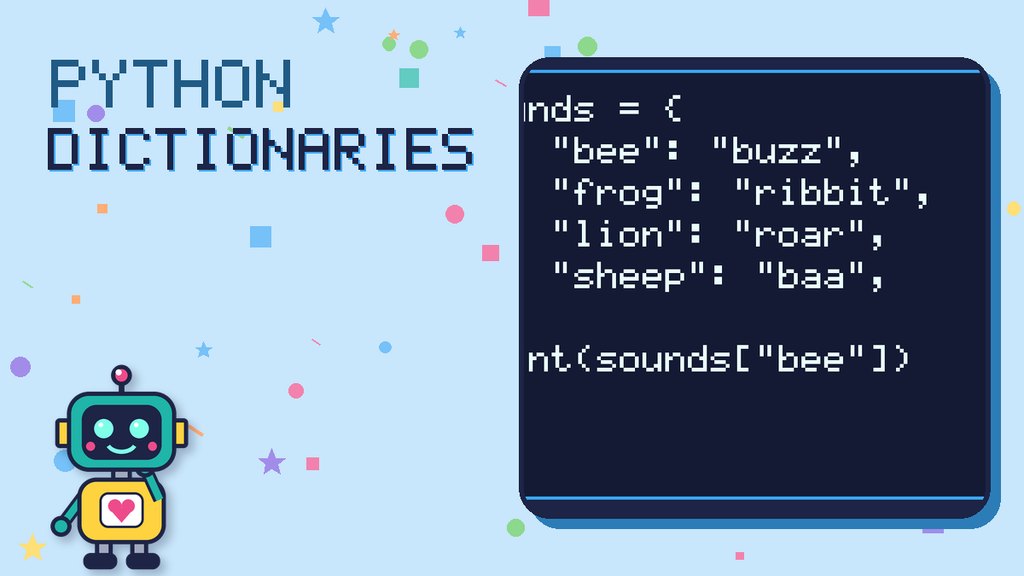
sounds = {
    "owl": "hoot",
    "sheep": "baa",
    "frog": "ribbit",
    "mouse": "squeak",
}
print(sounds["sheep"])
Choose an answer
| Choice | Output |
|---|---|
| A | baa |
| B | sheep |
| C | hoot |
| D | ribbit |
Need a hint?
Pretend you are the computer. Go through the program one line at a time, and write down every variable’s value on paper as it changes. Programmers call this a trace.
Grown-ups: Reading code and predicting what it does is a key programming skill. Once your child has chosen an answer, run the code in IDLE together to check.
For teachers and grown-ups
Skills practised: Code reading, tracing variables, and understanding Python syntax.
The big idea: Predicting a program's output before running it builds a solid mental model of how code works.
Questions to ask:
- What is the value of each variable after every line?
- Which line decides the output?
- What small change would make it print something different?
Take it further: Children use a trace table on paper for the code, then run it in IDLE to check, and change one value to make a new puzzle for a friend.