
The hidden picture is a pixel creature!
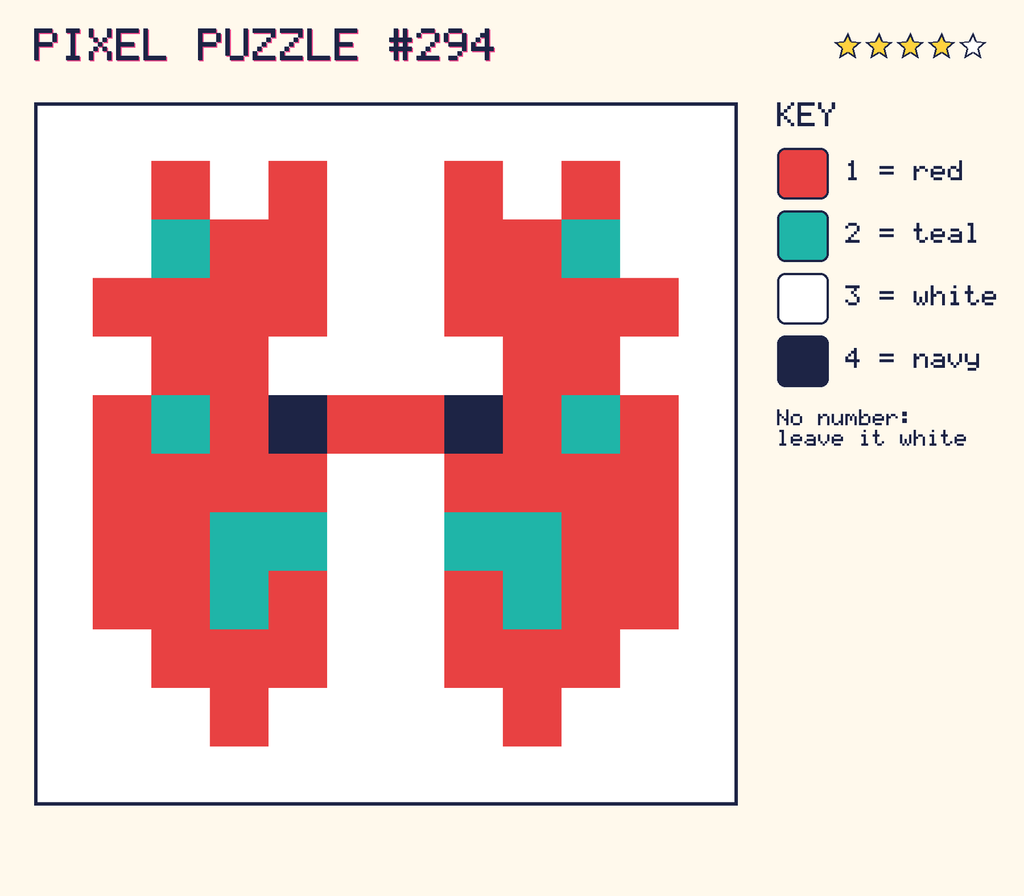
The picture as Python
Here is the same picture stored as numbers in a Python list. The program reads each number and prints a symbol for it, so you can see the picture appear in the Python shell.
picture = [
    "000000000000",
    "001010010100",
    "002110011200",
    "011110011110",
    "001130031100",
    "012141141210",
    "011110011110",
    "011220022110",
    "011210012110",
    "001110011100",
    "000100001000",
    "000000000000",
]
symbols = " #@*o"

for row in picture:
    line = ""
    for number in row:
        line = line + symbols[int(number)]
    print(line)
When you run it, it prints:
  # #  # #
  @##  ##@
 ####  ####
  ##*  *##
 #@#o##o#@#
 ####  ####
 ##@@  @@##
 ##@#  #@##
  ###  ###
   #    #
Squashing the picture smaller
Computers often save space with a trick called run-length encoding. Instead of storing every pixel, they count how many of the same colour are in a row. Here’s this picture written that way:
Show the run-length code
- Row 1: 12 × white
- Row 2: 2 × white, 1 × red, 1 × white, 1 × red, 2 × white, 1 × red, 1 × white, 1 × red, 2 × white
- Row 3: 2 × white, 1 × teal, 2 × red, 2 × white, 2 × red, 1 × teal, 2 × white
- Row 4: 1 × white, 4 × red, 2 × white, 4 × red, 1 × white
- Row 5: 2 × white, 2 × red, 1 × white, 2 × white, 1 × white, 2 × red, 2 × white
- Row 6: 1 × white, 1 × red, 1 × teal, 1 × red, 1 × navy, 2 × red, 1 × navy, 1 × red, 1 × teal, 1 × red, 1 × white
- Row 7: 1 × white, 4 × red, 2 × white, 4 × red, 1 × white
- Row 8: 1 × white, 2 × red, 2 × teal, 2 × white, 2 × teal, 2 × red, 1 × white
- Row 9: 1 × white, 2 × red, 1 × teal, 1 × red, 2 × white, 1 × red, 1 × teal, 2 × red, 1 × white
- Row 10: 2 × white, 3 × red, 2 × white, 3 × red, 2 × white
- Row 11: 3 × white, 1 × red, 4 × white, 1 × red, 3 × white
- Row 12: 12 × white