
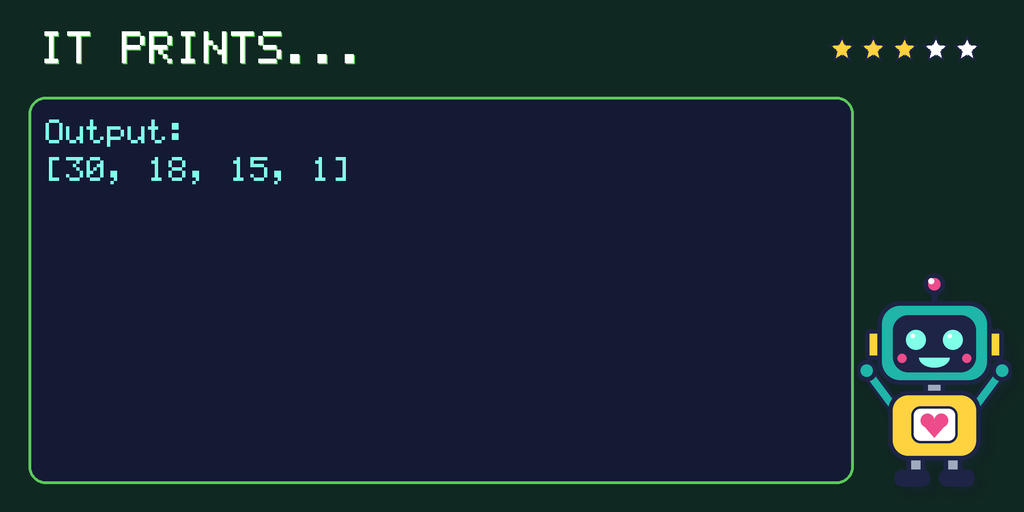
The answer is D. The program prints:
[30, 18, 15, 1]
Why?
sort() puts the list in order, smallest first. reverse=True flips it, so the biggest comes first. It changes the list itself.
The code again
scores = [1, 15, 30, 18]
scores.sort(reverse=True)
print(scores)
Try it: change one number in the program and predict the new output before you run it.