
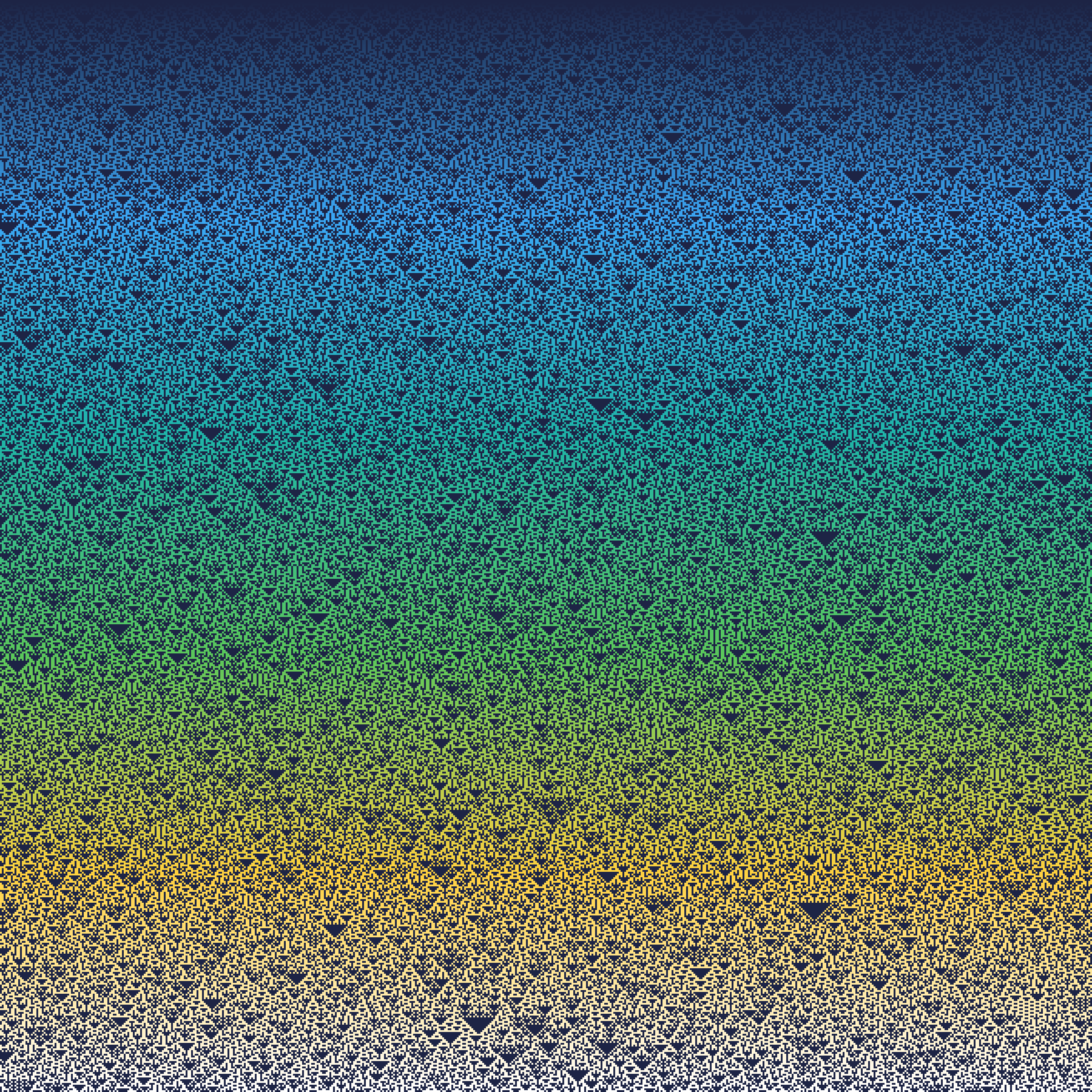
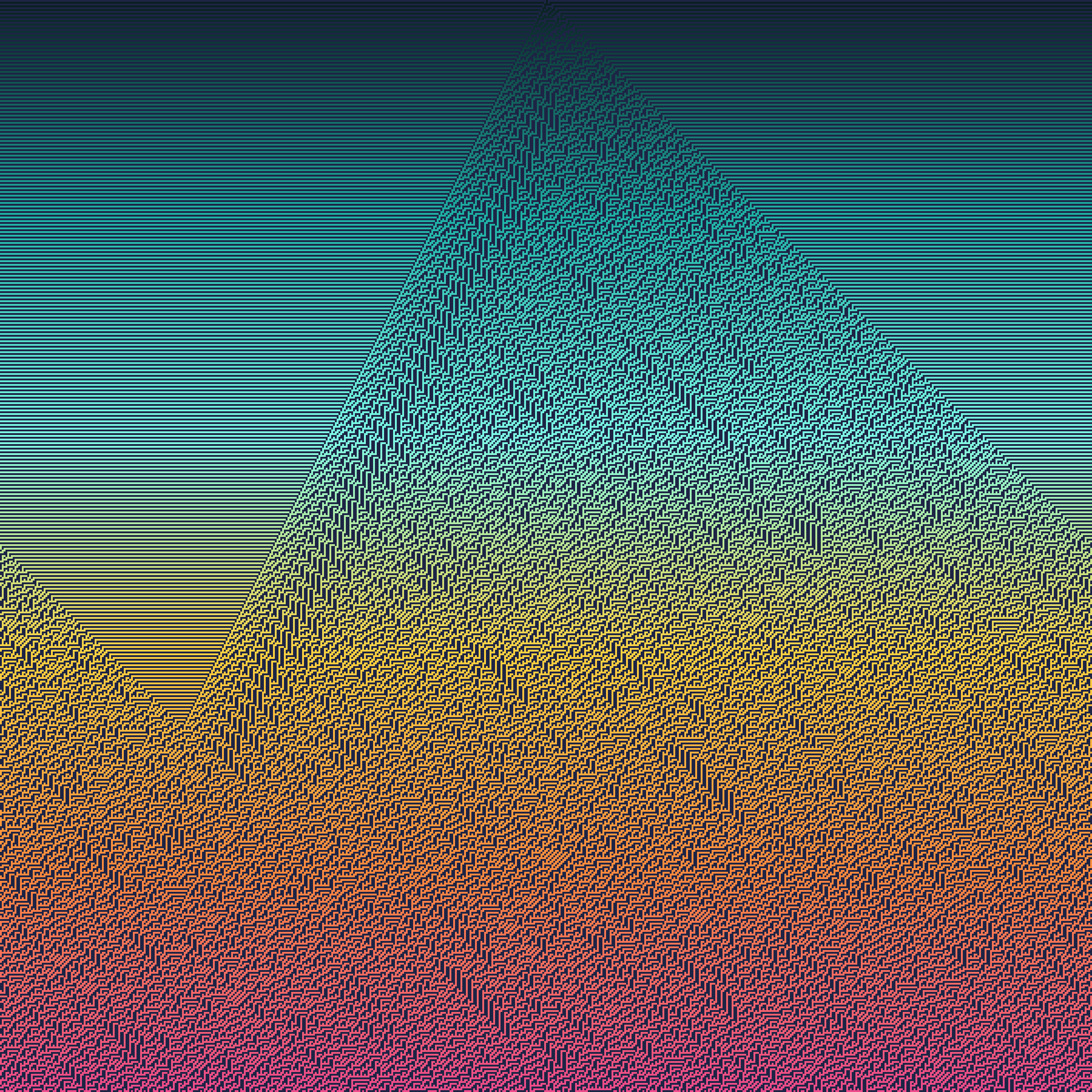
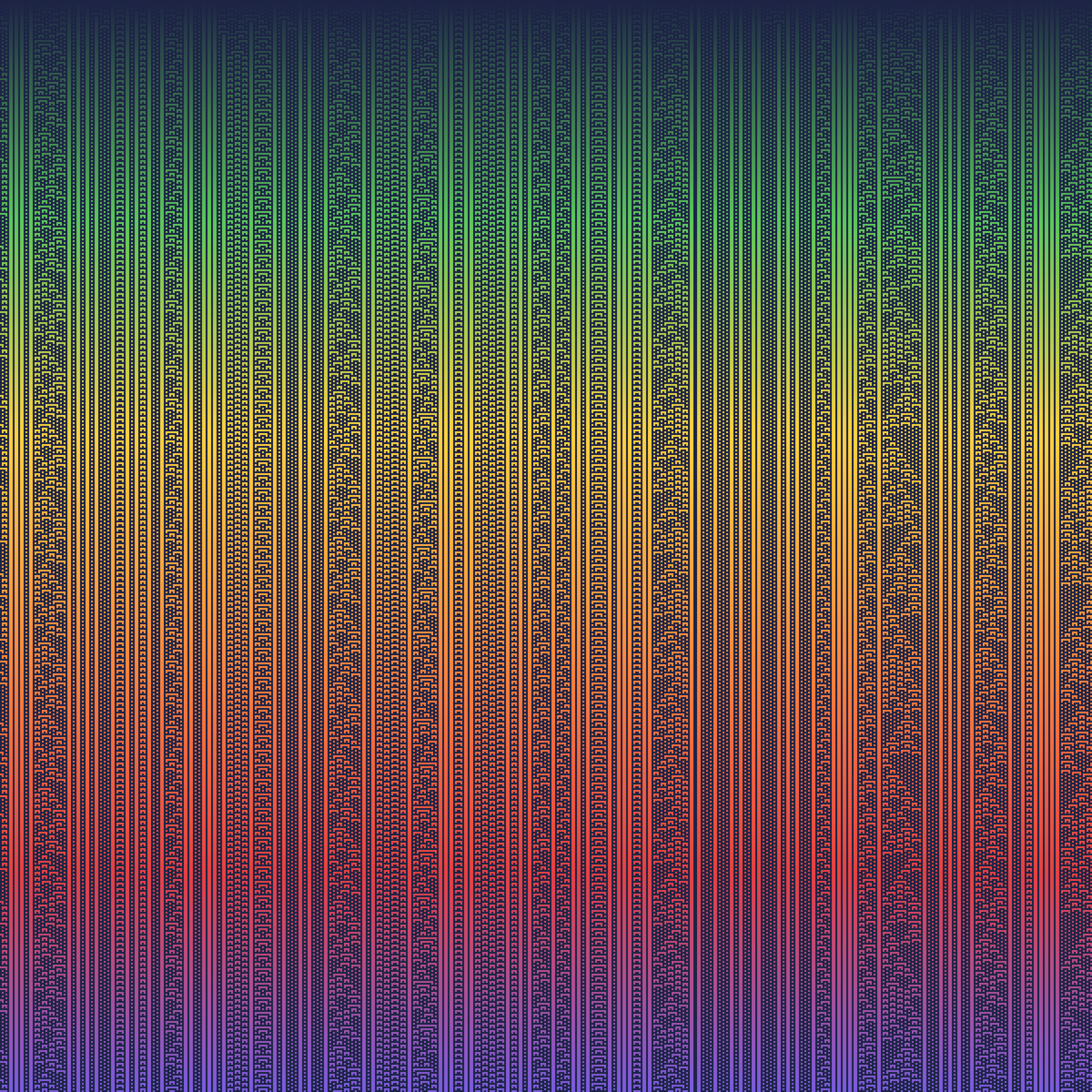
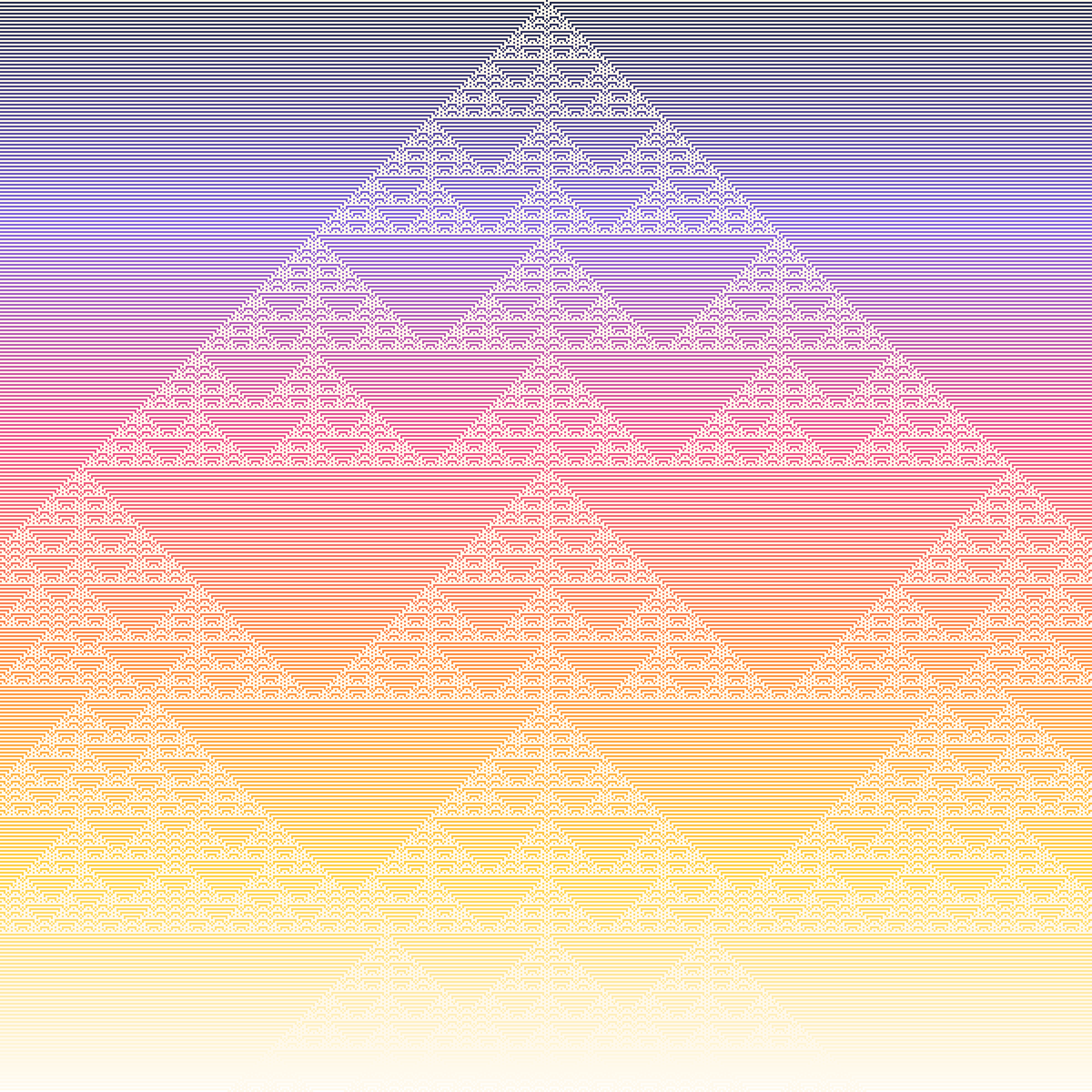
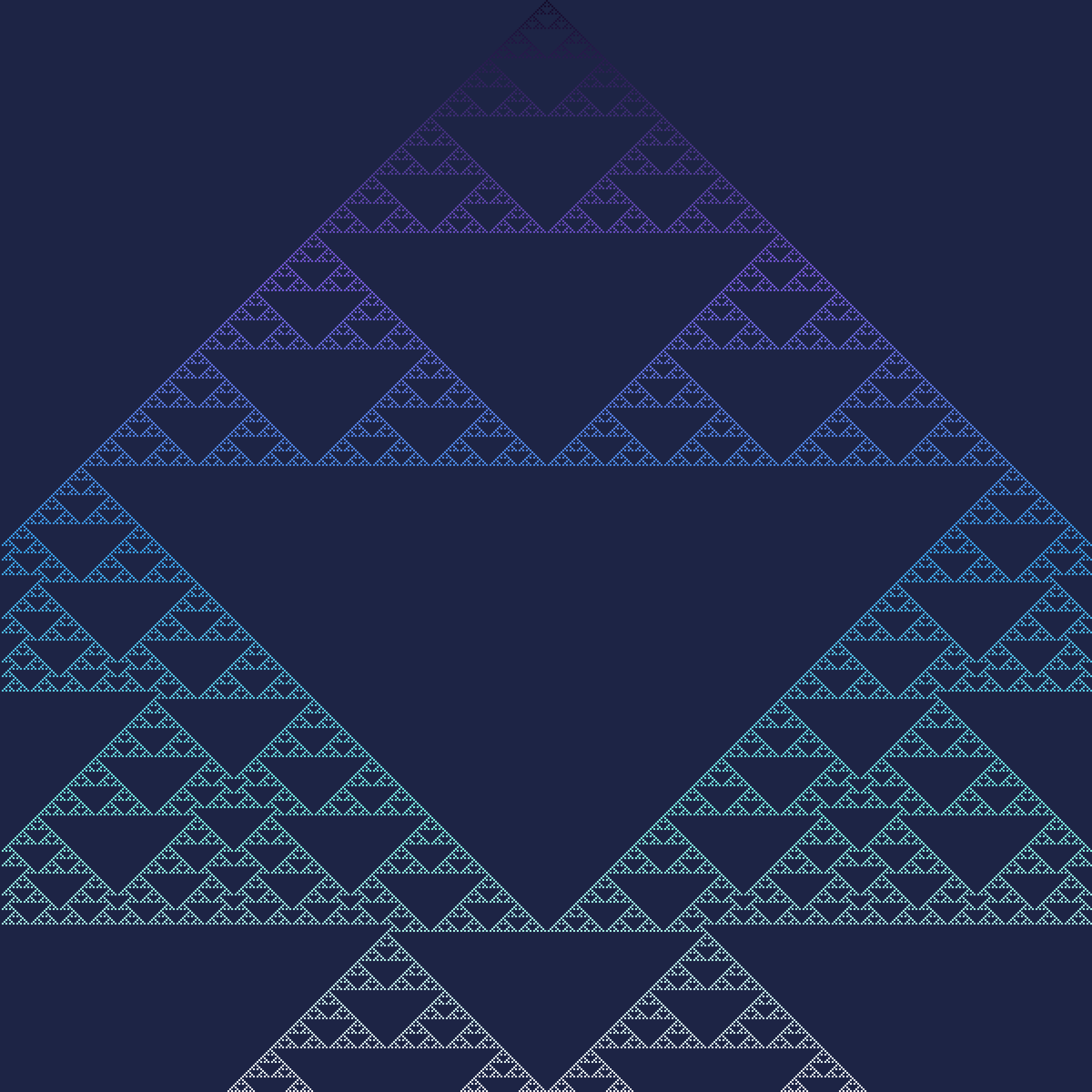
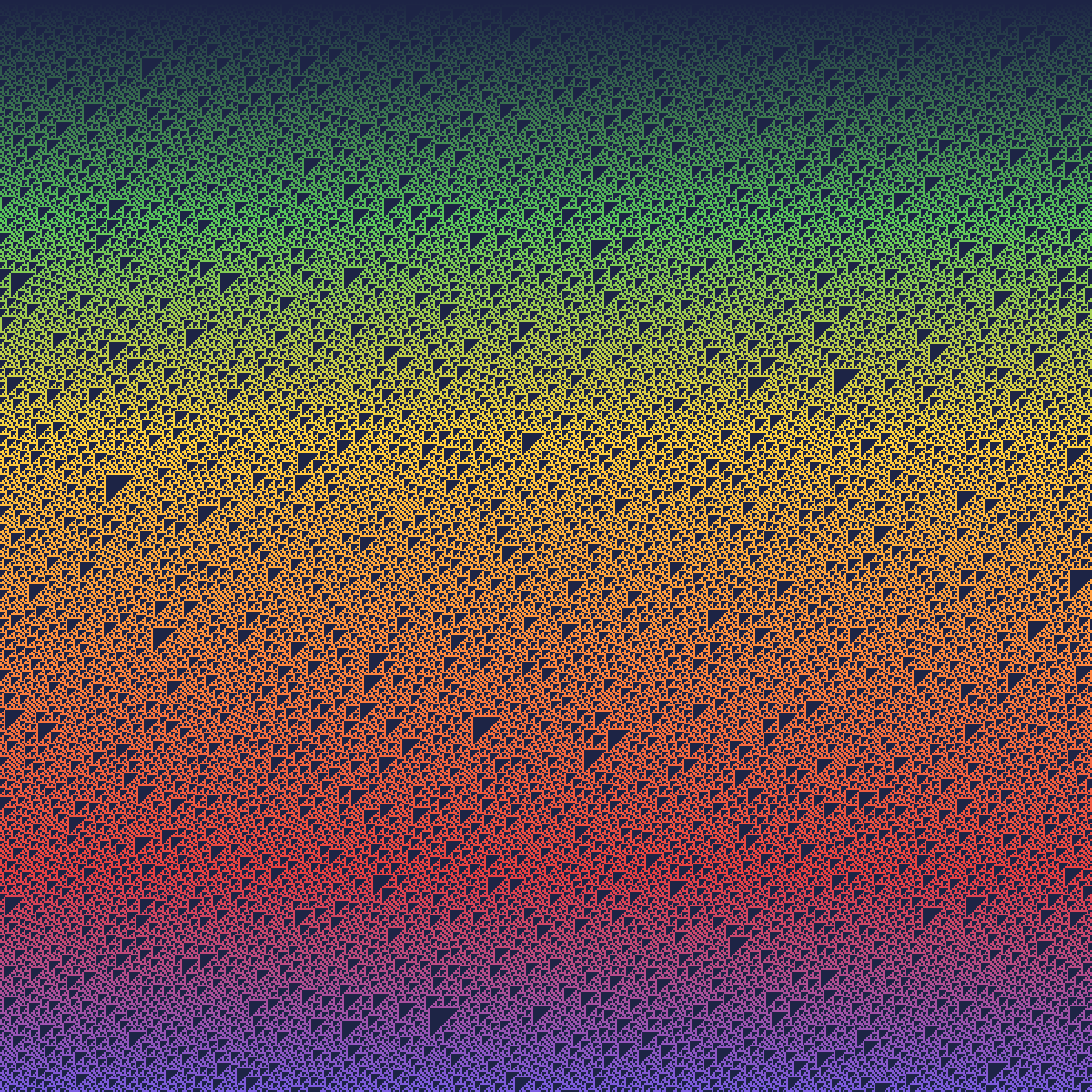
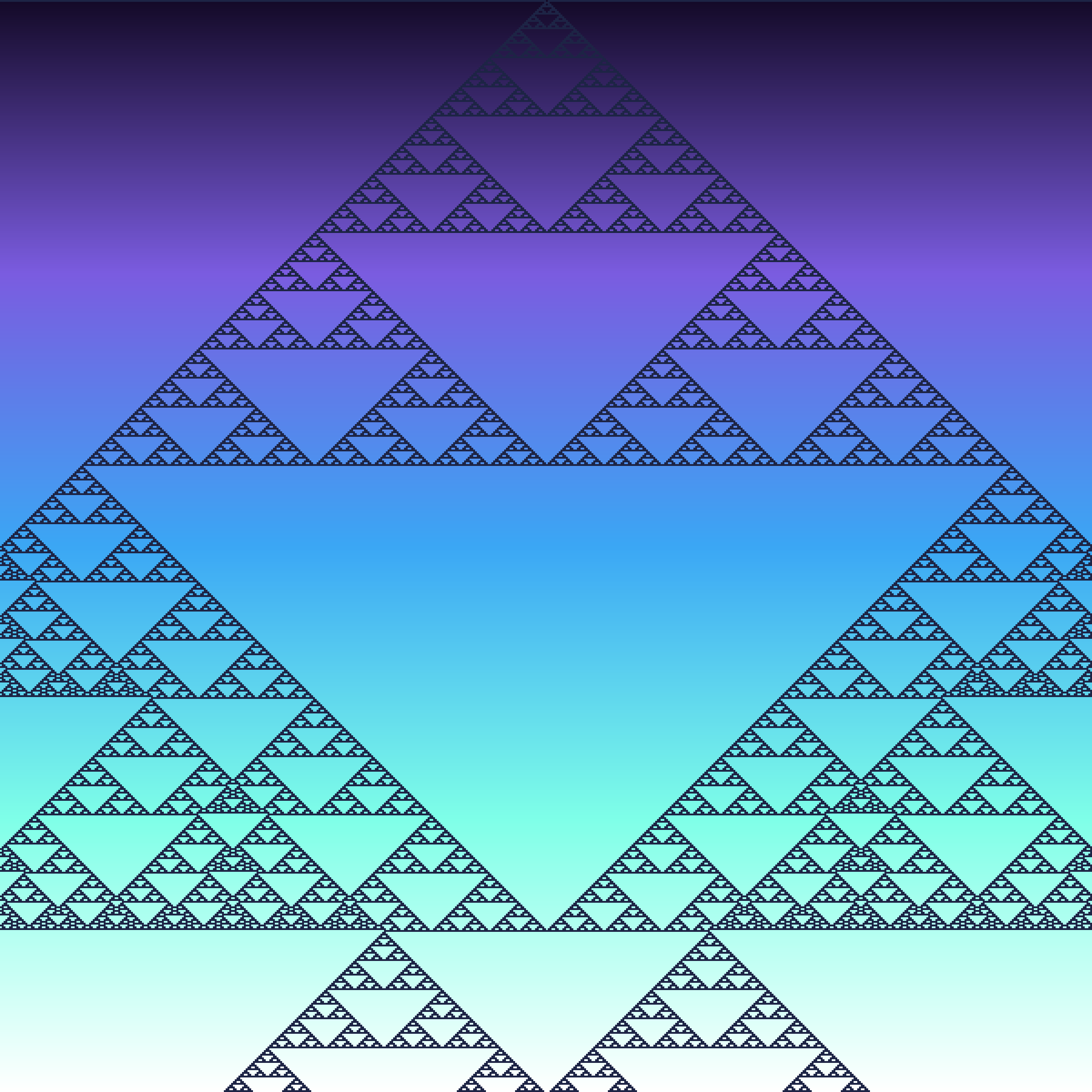
These patterns are made by cellular automata: rows of squares that are either on (1) or off (0). Each new row is worked out from the row above using a tiny rule. Different rule numbers make wildly different patterns, from neat triangles to total chaos.









Make one yourself
This Python program draws rule 90 with # for on and . for off. Each new cell looks at three cells above it, turns them into a number from 0 to 7, and uses that number to pick a bit from the rule. Rule 90 makes a famous triangle pattern called Sierpiński’s triangle!
rule = 90
cells = [0] * 15 + [1] + [0] * 15

for step in range(16):
    print("".join("#" if c else "." for c in cells))
    new = []
    for i in range(len(cells)):
        left = cells[i - 1]
        middle = cells[i]
        right = cells[(i + 1) % len(cells)]
        pattern = left * 4 + middle * 2 + right
        new.append((rule >> pattern) & 1)
    cells = new
When you run it, it prints:
...............#...............
..............#.#..............
.............#...#.............
............#.#.#.#............
...........#.......#...........
..........#.#.....#.#..........
.........#...#...#...#.........
........#.#.#.#.#.#.#.#........
.......#...............#.......
......#.#.............#.#......
.....#...#...........#...#.....
....#.#.#.#.........#.#.#.#....
...#.......#.......#.......#...
..#.#.....#.#.....#.#.....#.#..
.#...#...#...#...#...#...#...#.
#.#.#.#.#.#.#.#.#.#.#.#.#.#.#.#