
Track: How Computers Work · Lesson 10 of 10 · Ages: 8+ · Time: 30 minutes
The internet is full of wonderful things. You can learn how volcanoes work, watch funny animal videos, build games and chat with friends and family. It is a bit like a huge city. A city is great fun, and like in any city, a few simple habits help you stay safe and happy. In this lesson you will learn them.

Beep says Most people online are kind, and most of the time everything is fine. But I like to follow my safety steps every time, just like I look both ways before crossing a road. Beep boop!
A note about this website
This website has no accounts, no comments and no forms. It will never ask you for your name, your age, a photo or anything else about you. If a website, message or pop-up says it is from Beep & Pixel and asks you for personal information, it is not us, so stop and tell a grown-up.
What you need
- A trusted grown-up to chat with, like a parent, carer, teacher or another family member.
- Paper and a pencil.
- About 30 minutes.
Habit 1: Keep private things private
Personal information is anything that tells people who you are or where to find you. It is yours to keep safe. Keep these private, unless a trusted grown-up says it is fine in a particular case:
- Your full name.
- Your home address.
- Your school’s name.
- Your phone number.
- Your passwords.
- Where you are right now, or where you will be later.
- Photos that show any of the above, like your house number or school uniform.
A password is a secret word or phrase that lets only you into something. A good password is long, hard to guess and used for only one thing. Share your passwords with your parents or carers and nobody else, not even your best friend.
Pixel says My nickname is not secret, but I would never tell a stranger where I take my naps. A good rule of paw: if it helps someone find me, keep it to myself. Meow!
Habit 2: Think before you share
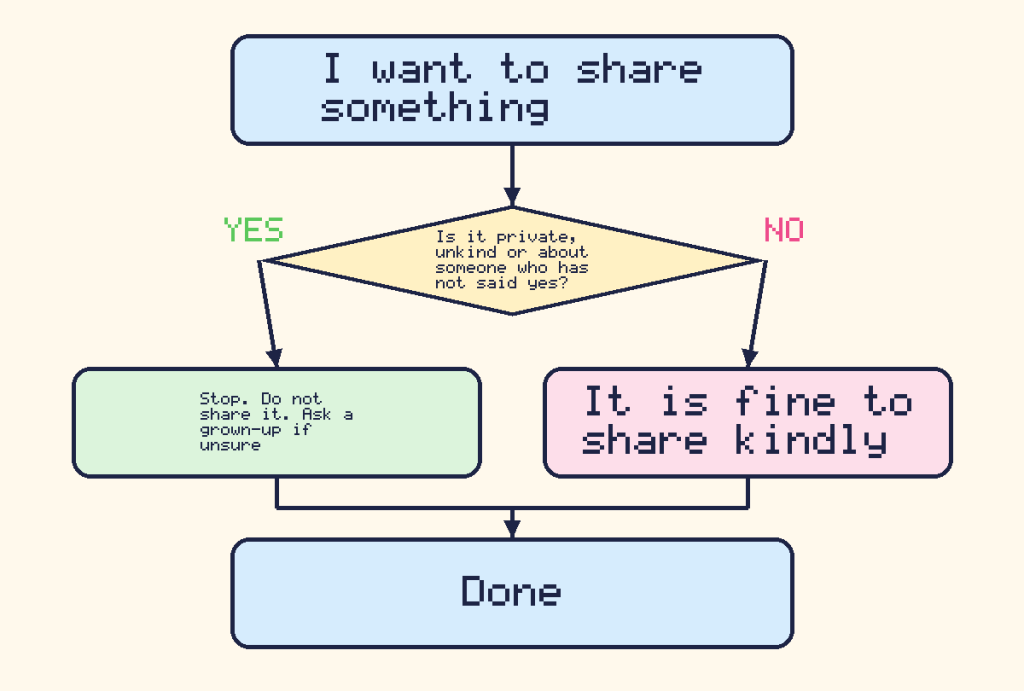
Once something goes online, it can be copied and passed around, and it can be hard to take back. So before you post, send or share something, stop and ask yourself:
- Is it private?
- Is it kind and true?
- Would I be happy for my family and teacher to see it?
- Does it show or talk about somebody else? If so, did I ask them first?
Habit 3: Be kind
Behind every screen, there is a real person with real feelings. Words on a screen can feel even stronger than words in person, because we cannot see faces. So use the same rule as at school: talk to people the way you would like to be talked to. A good test is: “Would I say this to their face?”
If somebody is unkind to you online, you have done nothing wrong. Do not reply with unkind words. Show a trusted grown-up. They can help you block the person and report them.
Habit 4: People may not be who they say
Online, anyone can pretend to be somebody else, such as a child or a friend. You cannot see or hear them, so you cannot be sure. That is why you should be careful about talking to people you have never met in real life, and always check with a grown-up first. Never agree to meet someone you only know from the internet, and never keep a conversation secret from your family.
Habit 5: Ask when you are not sure
Some things online look exciting but are tricky. A pop-up says you have won a prize. A message says “click here quick!”. A game asks you to download something or to sign up. Stop and ask a grown-up before you click, sign up, download or buy anything. It is always fine to say “let me ask first”.
Habit 6: Tell a grown-up if something worries you
Sometimes something online makes you feel worried, upset, scared or uncomfortable. Maybe it is a scary picture, a rude message, or someone asking you to keep a secret from your family. You are never in trouble for telling. Go to a trusted grown-up straight away, even if you are not sure it is a big deal. It is never your fault, and telling is brave and smart.
A little program for the habits
Here is a Python program that checks a list of ideas. It says “STOP” when the idea is a private thing, just like your brain does when you decide what to share.
private_things = ["home address", "password", "school name", "phone number", "full name"]
ideas = ["favourite colour", "password", "favourite game", "home address", "phone number"]
for idea in ideas:
    if idea in private_things:
        print(idea, "-> STOP! Keep it private.")
    else:
        print(idea, "-> OK to chat about with people you know.")
favourite colour -> OK to chat about with people you know. password -> STOP! Keep it private. favourite game -> OK to chat about with people you know. home address -> STOP! Keep it private. phone number -> STOP! Keep it private.
The program checks each idea against the private list, and the if and else pick what to print. Real life is trickier than a short list, so your own good sense and a trusted grown-up beat any program.
Challenges
Try it A message pops up on a screen. It says “You have won a prize! Type your address so we can send it.” What do you do?
Show the answer
Do not type anything. Messages like this are tricks to get your personal information. Close it, or leave it alone, and tell a trusted grown-up about it. You did the right thing by stopping.
Try it Someone online sends you a rude message that makes you feel sad. What are three good things to do?
Show the answer
- Do not reply with unkind words.
- Show a trusted grown-up straight away.
- Ask them to help you block the person and report the message. It is not your fault, and you are brave for telling.
Try it Think of two trusted grown-ups you could go to if something online worried you. Why do you trust them? Tell a friend or family member how it feels to know who you would go to.
Grown-ups Children are safest when they know they can come to you without getting into trouble, so the single most useful thing is a calm reaction when they tell you something. Talk about these habits regularly, keep devices in shared spaces where possible, and use the privacy and parental controls on the apps and games your child uses. Check each app’s age rules and look up its reporting and blocking tools together. Agree some family rules about what to share, what to ask first and what to do if something feels wrong.
What you learned
- Keep personal information private: full name, address, school, phone number, passwords and your location.
- Think before you share: is it private, kind and true?
- Be kind online, because there is a real person behind every screen.
- People online may not be who they say, so ask a grown-up before talking to someone you do not know.
- Ask a grown-up when you are unsure, and tell a trusted grown-up if anything makes you feel worried. You are never in trouble for telling.